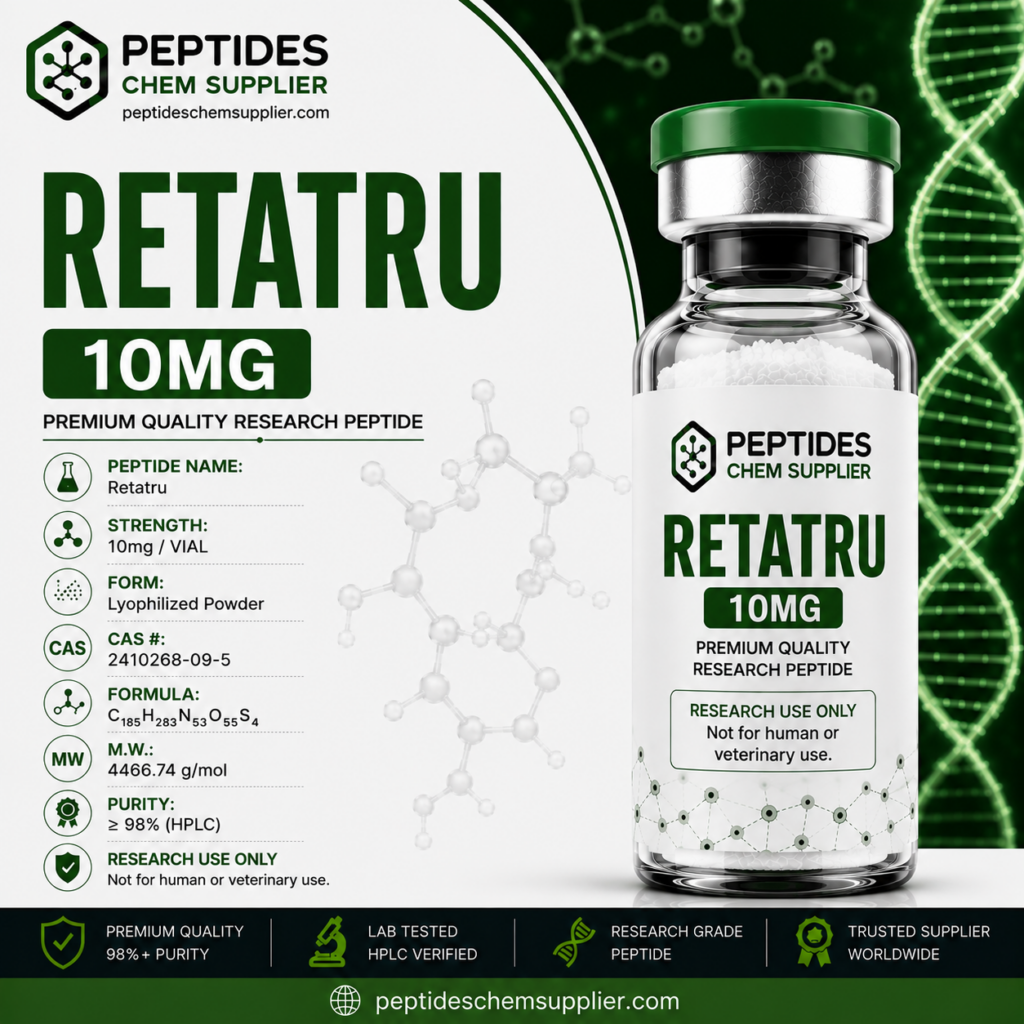

Retatru 20mg
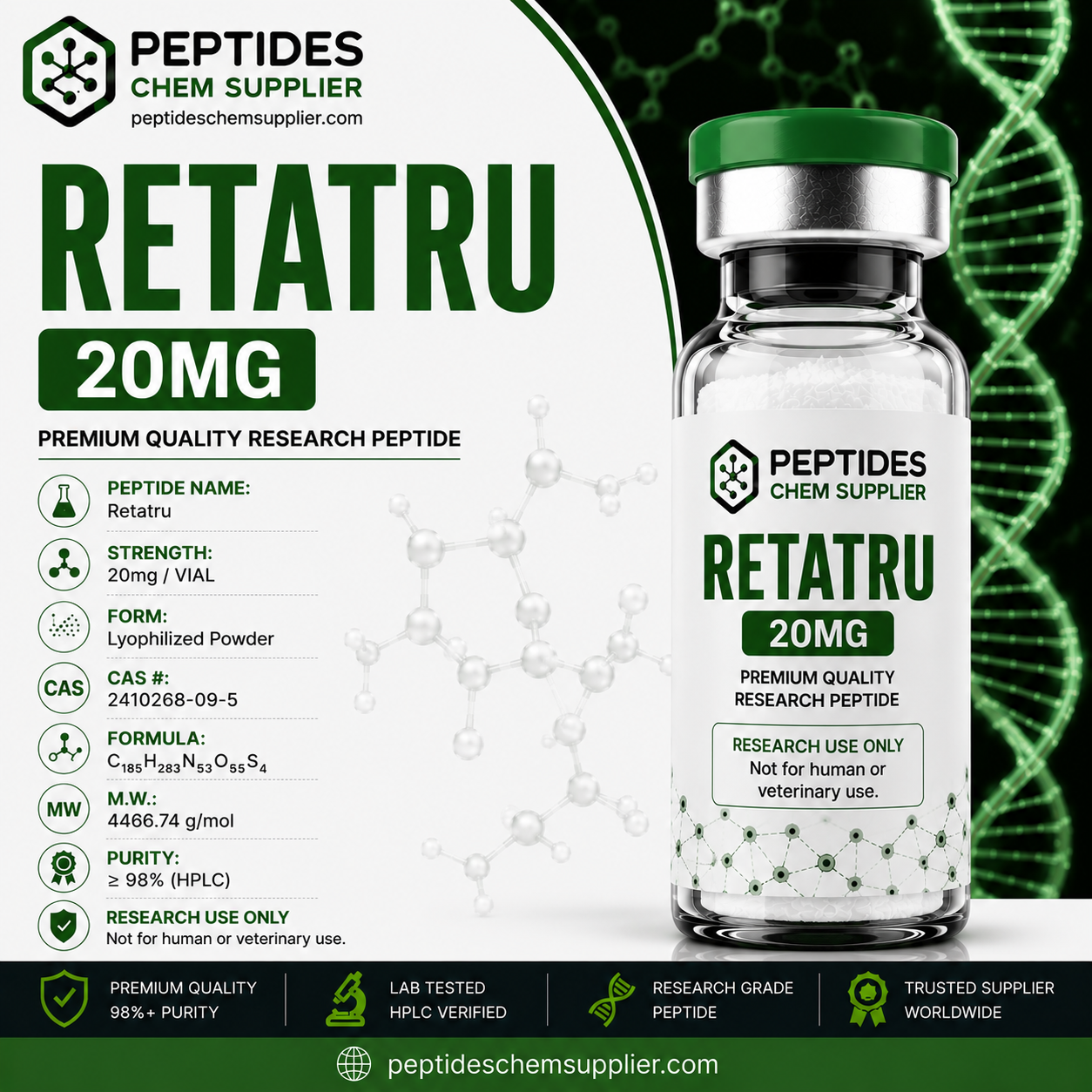
Product Name: Retatru 20mg
Compound: Retatrutide
Quantity: 20mg
Product Category: Research peptide
Peptide Type: Synthetic metabolic research peptide
Research Area: GLP-1, GIP, and glucagon receptor research
Intended Application: Laboratory and analytical research
Format: Refer to current product specifications
Documentation: Batch-specific documentation where available
Purity: Refer to the applicable Certificate of Analysis
Storage: Follow product-specific documentation
Use: Research use only
$120.00
Retatru 20mg Research Peptide
Retatru 20mg is a research-oriented peptide material associated with retatrutide research. Retatrutide is an investigational synthetic peptide that has been studied for its activity at three metabolic hormone receptors: the glucagon receptor (GCGR), glucose-dependent insulinotropic polypeptide receptor (GIPR), and glucagon-like peptide-1 receptor (GLP-1R).
Retatrutide is therefore commonly described as a triple agonist in scientific literature. Research has focused on receptor pharmacology, metabolic signaling, energy metabolism, body-weight regulation, glucose-related pathways, and related biochemical mechanisms.
Retatru 20mg is presented strictly as a research material for qualified laboratory, analytical, educational, and scientific research applications. It is not marketed on this page as an approved pharmaceutical, dietary supplement, or therapeutic product.
For Research Use Only. Not for Human Consumption.
Retatru 20mg Product Information
Product Name: Retatru 20mg
Compound: Retatrutide
Quantity: 20mg
Product Category: Research peptide
Peptide Type: Synthetic metabolic research peptide
Research Area: GLP-1, GIP, and glucagon receptor research
Intended Application: Laboratory and analytical research
Format: Refer to current product specifications
Documentation: Batch-specific documentation where available
Purity: Refer to the applicable Certificate of Analysis
Storage: Follow product-specific documentation
Use: Research use only
Researchers should verify the current product specifications and applicable batch documentation before incorporating the material into a laboratory workflow.
What Is Retatrutide?
Retatrutide is an investigational peptide designed to interact with three receptor systems involved in metabolic regulation:
- GLP-1 receptor
- GIP receptor
- Glucagon receptor
Because of this multi-receptor activity, retatrutide is commonly referred to as a GIP/GLP-1/glucagon receptor triple agonist.
This distinctive pharmacological profile has made retatrutide an important subject in contemporary metabolic research. Researchers are investigating how simultaneous activity across these receptor systems influences cellular signaling, energy metabolism, glucose regulation, and other biological pathways.
Retatru 20mg and Triple-Receptor Research
One of the most significant characteristics of retatrutide research is its activity across three receptor pathways.
GLP-1 Receptor Research
The GLP-1 receptor is associated with signaling pathways involved in glucose metabolism, gastrointestinal processes, and energy regulation.
GIP Receptor Research
GIP receptor signaling is another area of interest in metabolic research, particularly in studies examining nutrient-dependent endocrine signaling.
Glucagon Receptor Research
Glucagon receptor activity is relevant to research involving hepatic metabolism, energy utilization, and glucose-related signaling.
Studying these pathways together allows researchers to investigate the molecular effects of combined receptor activation.
Retatru 20mg Research Applications
Metabolic Research
Retatrutide has attracted significant research interest because of its multi-receptor activity and potential effects on metabolic pathways.
Receptor Pharmacology
Laboratories may investigate interactions between retatrutide and GLP-1, GIP, and glucagon receptors using appropriate experimental systems.
Cellular Signaling
Researchers can study downstream signaling mechanisms associated with simultaneous activation of multiple metabolic receptor pathways.
Energy Metabolism Research
Retatrutide is relevant to experimental research involving energy expenditure, substrate utilization, and metabolic regulation.
Peptide Chemistry
Researchers may evaluate the peptide’s molecular structure, purity, stability, identity, and other physicochemical characteristics.
Analytical Research
Qualified laboratories may characterize retatrutide using suitable analytical techniques to assess identity, purity, concentration, and stability.
Retatrutide and GLP-1 Research
GLP-1 receptor signaling is an important area of modern metabolic research. Retatrutide differs from selective GLP-1 receptor research compounds because it is designed to interact with multiple receptor systems.
Researchers may therefore compare retatrutide with other peptide research materials to investigate differences in:
- Receptor activity
- Molecular signaling
- Peptide structure
- Metabolic pathways
- Experimental responses
- Pharmacological characteristics
Such comparisons should be conducted using appropriate scientific methodologies and controlled research models.
Retatrutide and GIP Research
GIP is an incretin hormone involved in nutrient-responsive endocrine signaling. GIP receptor activity has become an important area of metabolic research.
Retatrutide provides a research model for examining GIP receptor activity alongside GLP-1 and glucagon receptor signaling.
This multi-pathway approach allows researchers to investigate how different metabolic receptor systems interact within experimental models.
Retatrutide and Glucagon Research
Glucagon signaling plays an important role in energy metabolism and hepatic glucose regulation.
Research involving retatrutide may investigate how glucagon receptor activity interacts with GLP-1 and GIP signaling at the molecular and cellular levels.
This makes retatrutide relevant to research involving:
- Glucose metabolism
- Energy utilization
- Hepatic signaling
- Receptor pharmacology
- Metabolic gene expression
- Cellular energy pathways
Retatru 20mg Research Material
Retatru 20mg may be evaluated as a research peptide material for its physical, chemical, and analytical properties.
Laboratory evaluation may include:
- Peptide identity
- Chemical purity
- Concentration
- Stability
- Molecular characterization
- Batch consistency
- Analytical profile
- Receptor-binding research
- Structure-function studies
Researchers should follow the product-specific documentation for storage and handling requirements.
Retatrutide Certificate of Analysis
A Certificate of Analysis (COA) can provide useful batch-specific information when evaluating Retatru 20mg research material.
Depending on the applicable batch, documentation may include:
- Product identification
- Peptide identification
- Batch or lot number
- Analytical testing
- Reported purity
- Testing date
- Applicable specifications
- Laboratory test results
Researchers should review the COA associated with the specific batch being evaluated rather than assuming that information from another batch applies to the current material.
Research Peptide Quality Considerations
When evaluating Retatru 20mg, laboratories may consider:
- Compound identity
- Peptide sequence
- Batch traceability
- Analytical documentation
- Reported purity
- Product format
- Packaging
- Storage requirements
- Testing information
- Applicable regulatory requirements
PeptidesChemSupplier.com provides structured research-product information to help qualified laboratories evaluate peptide materials according to their scientific and analytical requirements.
Retatru 20mg Research Peptide Supplier
Researchers searching for this material may use several related terms, including Retatru 20mg research peptide, Retatrutide research peptide, Retatrutide research compound, Retatru research material, Retatrutide laboratory peptide, triple agonist research peptide, and GIP GLP-1 glucagon research peptide.
Using both the product name Retatru and the scientific name retatrutide can make relevant research information easier to locate and distinguish the compound from other metabolic research peptides.
International Retatru Research
Researchers in different geographic markets may use location-specific search terms when looking for retatrutide research materials.
Relevant searches can include:
- Retatru 20mg research peptide USA
- Retatru research peptide USA
- Retatrutide research peptide USA
- Retatrutide research compound USA
- Retatru 20mg research peptide UK
- Retatru research peptide UK
- Retatrutide research peptide UK
- Retatrutide research compound UK
- Retatru 20mg research peptide Canada
- Retatru research peptide Canada
- Retatrutide research peptide Canada
- Retatrutide research compound Canada
- Retatru 20mg research peptide Europe
- Retatru research peptide Europe
- Retatrutide research peptide Europe
- Retatrutide research compound Europe
- Retatru 20mg research peptide Australia
- Retatru research peptide Australia
- Retatrutide research peptide Australia
- Retatrutide research compound Australia
- Retatru 20mg research peptide India
- Retatru research peptide India
- Retatrutide research peptide India
- Retatrutide research compound India
Availability, import requirements, customs rules, and regulatory requirements can differ between jurisdictions. Customers and laboratories are responsible for determining the requirements applicable to research materials in their location.
Geographic terminology is included to help researchers locate relevant research information and does not imply authorization for human use in any particular country.
Retatrutide and Scientific Research
Retatrutide has been extensively investigated in preclinical and clinical research as a multi-receptor metabolic peptide. Scientific research has examined its activity at GLP-1, GIP, and glucagon receptors and its relationship with metabolic outcomes in experimental and clinical settings.
Research continues to investigate the molecular and physiological effects of simultaneous activity across these receptor systems.
Because retatrutide remains an investigational compound, researchers should distinguish ongoing research findings from established therapeutic indications and evaluate current scientific literature when interpreting results.
Frequently Asked Questions About Retatru 20mg
What is Retatru 20mg?
Retatru 20mg is a research-oriented peptide material associated with retatrutide research and intended for qualified laboratory and analytical applications.
What is Retatrutide?
Retatrutide is an investigational synthetic peptide that has been studied for activity at the GLP-1, GIP, and glucagon receptors.
Why is retatrutide called a triple agonist?
Retatrutide is described as a triple agonist because it has activity across three receptor systems: GLP-1R, GIPR, and GCGR.
What research areas are associated with retatrutide?
Research may include metabolic signaling, receptor pharmacology, peptide chemistry, cellular signaling, energy metabolism, glucose-related pathways, and structure-function research.
Is Retatru 20mg intended for human use?
No. The material is presented strictly as research material and is not intended for human consumption, self-administration, or therapeutic use.
Does Retatru 20mg have a COA?
Batch-specific analytical documentation may be available. Researchers should review the Certificate of Analysis associated with the specific batch being evaluated.
How should Retatru 20mg be stored?
Storage and handling should follow the product-specific documentation supplied with the material and the procedures established by the relevant laboratory.
Research Use Disclaimer
Retatru 20mg is supplied strictly for research, analytical, educational, and laboratory purposes.
It is not intended for human consumption, self-administration, medical use, therapeutic use, diagnostic use, veterinary use, or use as a food additive.
The information presented on this page is provided for scientific and educational purposes and should not be interpreted as medical advice or as a claim that retatrutide can diagnose, treat, cure, or prevent any disease or medical condition.
Researchers, institutions, and purchasers are responsible for complying with applicable laws, regulations, import requirements, institutional policies, and laboratory safety requirements governing research materials in their jurisdiction.
Product specifications, analytical information, availability, and documentation may vary by batch. Researchers should refer to the applicable product documentation and Certificate of Analysis for the specific material being evaluated.